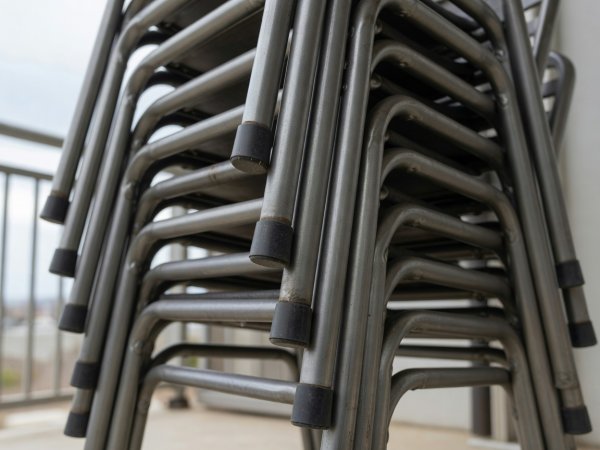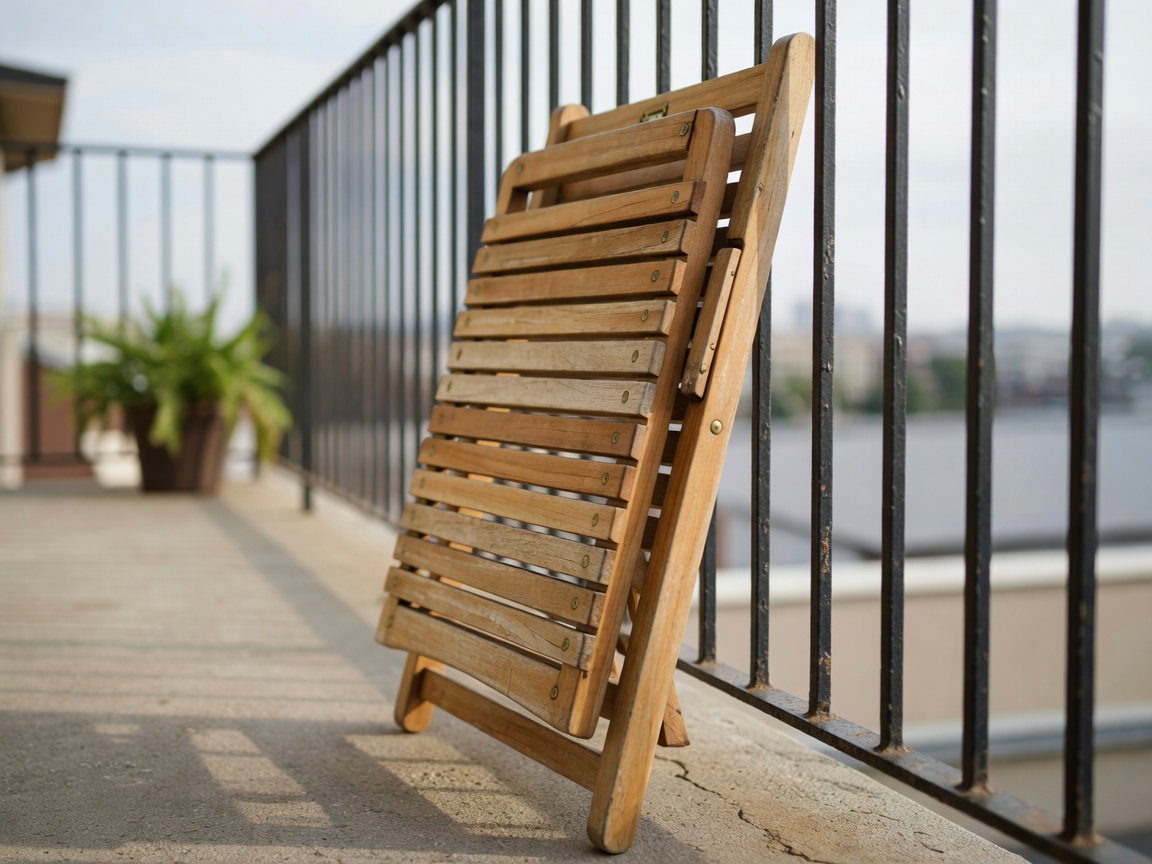
Every piece has two sizes
When a product listing says "compact", it usually means the open size. On a small balcony you need both numbers: the open footprint, which must fit outside your door arc and walking route, and the folded footprint, which must fit somewhere you can reach easily. Write both on your floor sketch. If the folded piece has to go indoors, measure that spot too — the gap beside the fridge or behind a wardrobe door is often the real limit.
Folded depth is the number people forget. A chair that folds to 9 cm can lean against a wall without eating into your route; one that folds to 20 cm because of armrests or a thick seat may not.
Where folded pieces can live
- Flat against the wall
Best for thin chairs; keep them out of the door arc.
- Indoors in bad weather
Extends hinge life; measure the indoor slot.
- Hung on a wall hook
Only where your building allows fixings.
- Under a bench
Check clearance height before buying both.
Open-versus-folded comparison
| Piece | Open footprint | Folded footprint | Folded depth | Best for | Watch out for |
|---|---|---|---|---|---|
| Folding bistro chair | ≈ 45 × 50 cm | ≈ 45 × 9 cm | 8–10 cm | Occasional seating | Pinch points, shallow seats |
| Folding armchair | ≈ 60 × 65 cm | ≈ 60 × 18 cm | 15–20 cm | Longer sitting | Thick folded profile |
| Folding round table | Ø 60 cm | ≈ 60 × 7 cm | 6–8 cm | Two people, coffee | Wobble on sloped floors |
| Railing drop-leaf table | ≈ 60 × 40 cm | ≈ 60 × 10 cm | 10 cm | Narrow balconies | Railing rules, load on rail |
| Wall drop-leaf table | ≈ 70 × 45 cm | ≈ 70 × 8 cm | 8 cm | Very shallow spaces | Needs drilling permission |
| Stacking chair | ≈ 50 × 55 cm | ≈ 50 × 55 cm | Stack height +5 cm each | Frequent use | No floor saving when stored |
| Folding lounger | ≈ 190 × 60 cm | ≈ 95 × 60 cm | ≈ 15 cm | Sunbathing on deeper balconies | Rarely fits a 120 cm depth |
Hinges, joints and weather
The hinge is where folding furniture lives or dies. On an exposed balcony, rain sits in joints, salt air near the coast speeds up corrosion, and grit wears pivot points. Look for stainless-steel or well-coated fixings, nylon washers between moving parts, and joints you can wipe dry. Powder-coated aluminium resists rust; oiled acacia and teak cope with weather but need occasional care. Before buying, open and close the piece several times if you can — a stiff or gritty action usually gets worse outdoors.
Check, too, for finger traps. Scissor-style legs can pinch, which matters if children help set up.