List your daily uses first
Write down everything you actually do on the balcony in a typical week, with a rough time of day: morning coffee at 7.30, watering plants after work, drying laundry on Saturdays, a phone call in the evening. Then mark which uses happen daily, weekly or rarely. Daily uses earn a permanent zone. Weekly uses can borrow space. Rare uses — a birthday drink for four — can rely on folding pieces brought out for the occasion.
This list keeps you honest. Many small balconies are crowded with furniture for an imagined lifestyle while the real daily habit, like hanging washing, has nowhere to go.
Common zones
- Sit zone
One or two seats where you most enjoy the light.
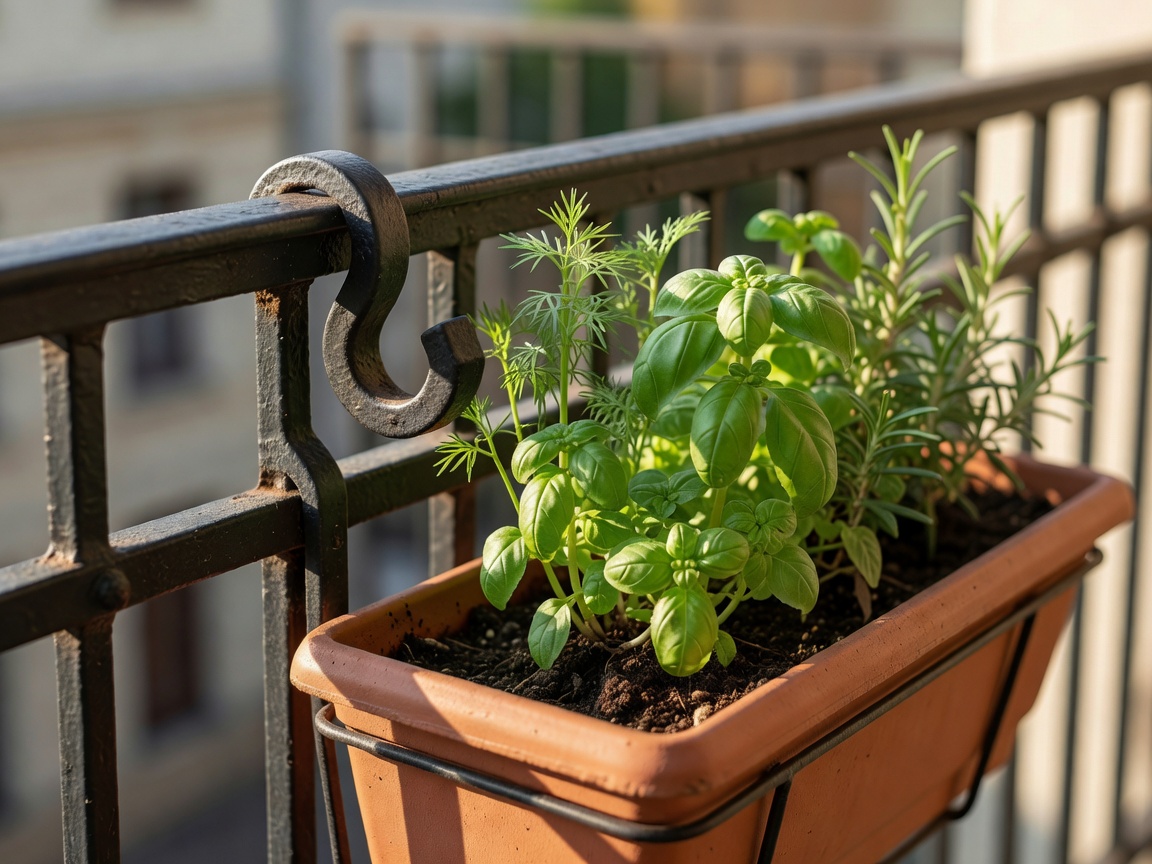
- Grow zone
Along the rail or a sunny wall.
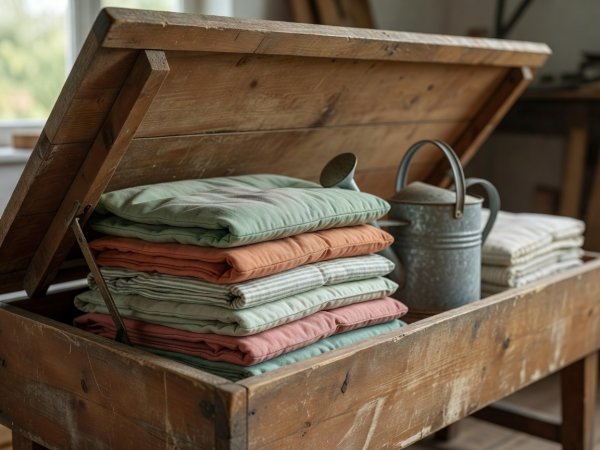
- Store zone
Wall side, away from the door arc.
- Utility zone
Drying rack, broom, watering can.
Share zones by time of day
On a small balcony, time is the extra square metre you do not have. A folding drying rack can stand in the sit zone on Saturday morning and be folded away by lunch. The coffee table can serve as a potting bench in the evening. Plan which zones overlap and make sure the shared furniture folds or moves easily — otherwise "shared" quietly becomes "permanently blocked".
Use edges before the middle
Keep the centre and the route open and push zones to the edges: the wall, the rail line and the corners. Low planters along the rail, a narrow storage box against the wall and a corner seat use space that is awkward to walk through anyway. Remember that anything placed against the railing must not become a step; keep tall planters and stools away from it, especially if children use the balcony.